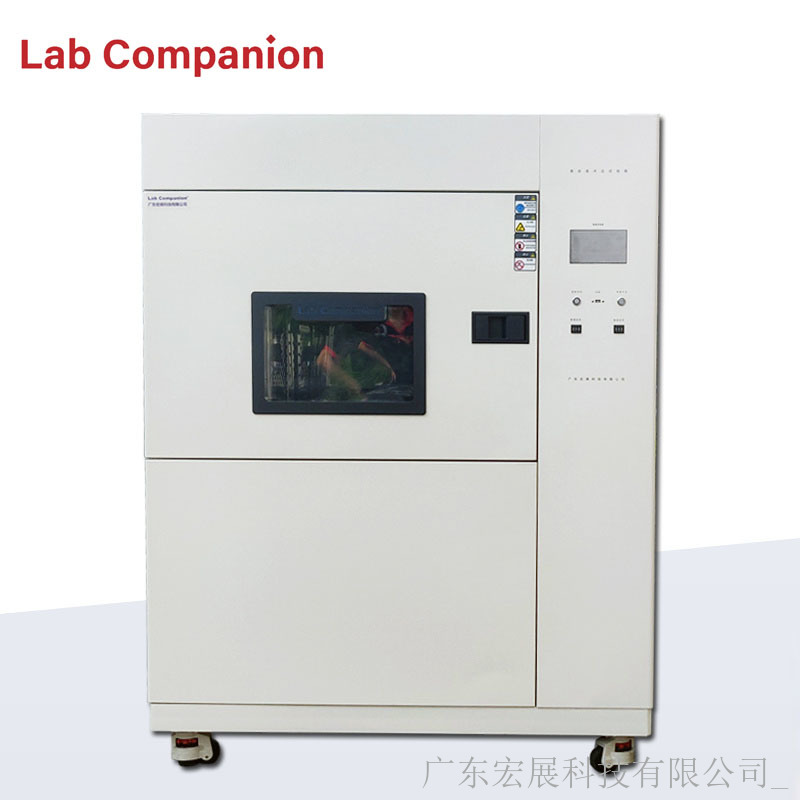
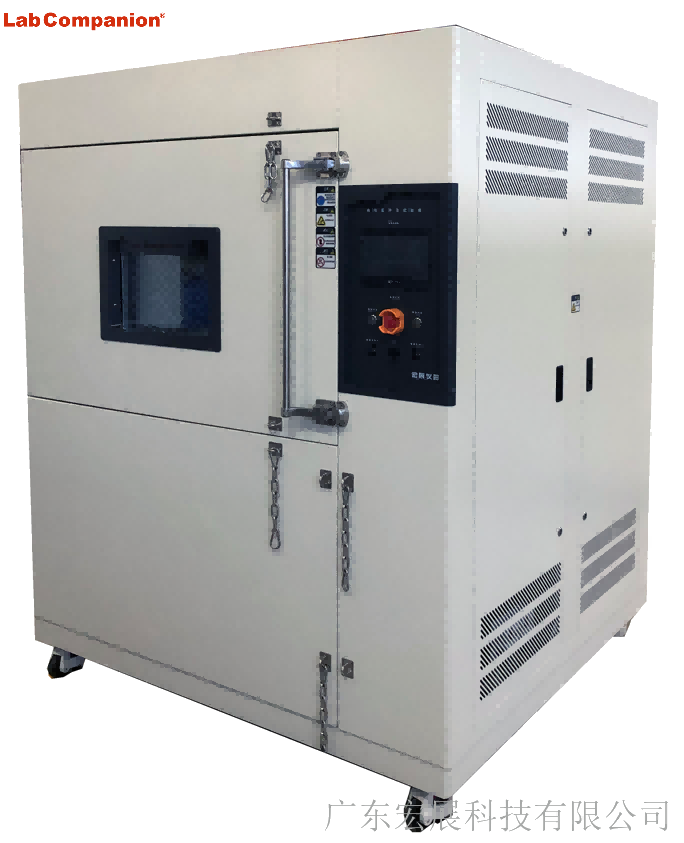
The three core functions of high-low temperature test chambers—constant temperature, high-low temperature cycling, and programmable operation—extensively cover environmental reliability testing requirements across industries including electronics, automotive, military, photovoltaic, and more.
As a high-tech enterprise with over 20 years of expertise in environmental reliability testing equipment, Lab Companion specializes in the R&D and manufacturing of environmental test equipment. Its products feature precise temperature control and customizable capabilities to adapt to diverse industry applications.
Understanding the core operation, practical techniques, and selection logic of each function enables precise matching to different test scenarios, effectively improving test efficiency and data reliability. Based on Lab Companion’s mature product technologies and industry practical experience, we provide the following concise professional guide.
1. Constant Temperature Test: Basic Temperature Resistance Verification
Core Purpose
Used for long-term performance testing of products under a single extreme temperature condition. It is the most common basic test mode for mass quality inspection and preliminary R&D, with easy operation and strong versatility.
Typical Applications
- High-temperature aging test of semiconductor components at 85°C- Low-temperature embrittlement verification of automotive rubber seals at -40°C- Constant-temperature storage stability testing of in vitro diagnostic reagents for medical devices at 50°C
Key Operational Points
- Prioritize models with temperature fluctuation ≤ ±0.5°C and uniformity ≤ ±2°C; high-precision versions achieve ±0.1–±0.3°C.- Standardized sample placement: sample volume ≤ 1/3 of working chamber volume, distance from chamber walls ≥ 5 cm to avoid blocking air ducts and compromising temperature uniformity.
Product Features (Lab Companion)
- Inner chamber made of SUS304 mirror-finish stainless steel for corrosion resistance and easy cleaning.- High-density polyurethane foam insulation and high-strength heat-resistant silicone gaskets minimize heat exchange and enhance temperature stability.- Custom ultra-low temperature models below -100°C available for military applications, fully compliant with GJB military standards.
2. High-Low Temperature Cycling Test: Thermal Cycling Reliability Testing
Core Purpose
Simulates temperature alternating environments such as day-night temperature differences, regional transportation, and seasonal changes encountered in real-world use. It rigorously verifies structural strength and performance stability, with stricter evaluation than constant temperature testing.
Typical Applications
- Thermal cycling test of new energy vehicle power batteries from -30°C to 85°C (simulating winter-summer conditions)- High-low temperature cycling verification of photovoltaic modules- Wide-temperature-range alternating performance testing of aerospace composite materials
Key Operational Points
- Standard models: heating rate up to 5°C/min, cooling rate up to 3°C/min.- High-performance models: two-stage compression refrigeration + eco-friendly refrigerant, stable temperature change rate up to 20°C/min, greatly shortening test cycles.- Enable PID auto-tuning to limit temperature overshoot within 0.8°C for accurate data.
Product Features (Lab Companion)
- Equipped with Balanced Temperature Control (BTHC) system for precise execution of preset cycling programs, preventing damage from sudden temperature changes.- Full-capillary automatic load adjustment system delivers higher accuracy and stability than conventional expansion valves, while reducing energy consumption by more than 30%.
3. Programmable Test: Automated Simulation of Complex Working Conditions
Core Purpose
Supports multi-segment linked programming of temperature and time parameters, enabling fully automatic operation of complex test sequences without manual supervision. Ideal for customized R&D testing and standardized quality inspection.
Typical Applications
- Multi-region temperature environment simulation for 5G base station PCBs- 1000-hour long-term cyclic aging testing of electronic components- Multi-temperature gradient verification for military-grade products
Key Operational Points
- Select models supporting at least 100 program groups (expandable to 200), with up to 99 segments per program.- Set segmented PID parameters according to thermal inertia differences between high and low temperature ranges for improved full-range accuracy.
Product Features (Lab Companion)
- Siemens PLC control + 7-inch color touchscreen for intuitive and stable operation.- AI adaptive algorithm ensures test data repeatability up to 99.5%.- Supports USB, RS485, and Ethernet communication for remote monitoring and real-time data export.- Automatically generates GLP-compliant test reports; power-off memory function resumes testing automatically after power restoration to prevent data loss.
4. Selection & Operation Guidelines
1. Selection Logic
- Basic quality inspection: Choose constant temperature models for optimal cost-effectiveness.- Product reliability validation: Select cycling models; fast temperature change versions recommended for new energy and automotive industries.- R&D or complex conditions: Choose programmable models.- Military & aerospace: Custom options available for low pressure, explosion-proof, and other non-standard functions.
2. Safety & Maintenance
- Equipment must include multiple protections: over-temperature, overload, compressor overheating, etc.- Regularly clean air ducts, inspect door gaskets, and calibrate temperature sensors every 3–6 months to extend service life and maintain accuracy.
3. Customization Options
Optional accessories available based on industry needs: test ports, data loggers, explosion-proof chambers, water purification systems, etc., to meet special testing requirements in medical, chemical, military, and other fields.
Conclusion
The three core functions of high-low temperature test chambers provide complete testing coverage from basic verification to high-precision simulation. By selecting the appropriate function based on product characteristics, industry standards, and test requirements—paired with equipment featuring precise temperature control, stable performance, and customization—along with standardized operation and maintenance, users can maximize equipment value and provide reliable assurance for product quality.
With the rapid development of the new energy vehicle industry, the safety and reliability of power batteries directly determine vehicle quality. High-low temperature testing is a key link, which must strictly comply with standards such as IEC 62133 and GB/T 31484. Currently, enterprises generally face three major pain points: thermal runaway risks, difficulty in standard compliance, and insufficient non-standard adaptation. With over 20 years of experience in environmental testing equipment, Guangdong Labcompanion has launched a dedicated explosion-proof high-low temperature test chamber for new energy, providing one-stop solutions with customized and compliant advantages.
I. Core Pain Points of Power Battery High-Low Temperature Testing
High-low temperature testing is the "lifeline" of power battery R&D and mass production, with core pain points focusing on three aspects:
l High thermal runaway risks: Swelling and fire are likely during testing; traditional equipment lacks targeted explosion-proof design, easily causing safety accidents and losses.
l Difficult compliance: Insufficient temperature control accuracy and incomplete data recording of traditional equipment lead to certification rework, making it hard for SMEs to enter the mainstream market.
l Poor non-standard adaptation: Long customization cycle (3-6 months) and high cost fail to match R&D schedules and diverse needs.
II. Labcompanion’s Customized Solutions
Targeting the pain points, Labcompanion solves the dilemmas from three core dimensions based on the needs of leading enterprises:
l Full-dimensional explosion protection: Real-time battery monitoring, passive protection, and inert gas replacement to eliminate safety hazards.
l Compliance guarantee: Temperature control accuracy ±0.3℃, uniformity ≤±0.5℃, traceable data, and professional certification guidance.
l Rapid customization: Volume 36L~1000L, customization cycle shortened to 1-3 months, supporting function expansion and intelligent operation.
III. Benchmark Case & Selection Suggestions
Labcompanion’s explosion-proof test chamber helped BYD shorten the R&D cycle of solid-state batteries by 20%, successfully pass IEC 62133 certification, and achieve bulk procurement.
Key selection points: Prioritize manufacturers with complete explosion-proof qualifications, compliance with standards, and strong customization and after-sales capabilities (Labcompanion has service centers in 12 cities nationwide, with 2-hour response, 48-hour on-site support, and 3-year warranty).
IV. Conclusion
Through technological innovation, Labcompanion solves key testing pain points of power batteries, gaining trust from leading enterprises. It will continue to deepen its layout to help the high-quality development of the new energy industry.
In product reliability testing, test chamber selection directly determines result value. While composite salt spray and high-low temperature test chambers are both environmental test equipment, their applications differ greatly. This guide helps you quickly select suitable equipment by testing requirements, application scenarios and core parameters.
I. Clarify Core Requirements First: What Problem Do You Need to Solve?
The first selection step is clarifying the core purpose—verifying "corrosion resistance" or "temperature change resistance", the essential difference between the two.
1. Choose Composite Salt Spray Test Chamber: When Focusing on "Corrosion Resistance Reliability"
For products exposed to high-salt/humid environments or relying on coatings/platings, the composite salt spray test chamber is ideal. It simulates marine/coastal industrial corrosion environments to accurately assess protective system durability.
Typical Requirement Scenarios:
① Coastal-used automotive parts (prevent coating peeling/rusting)
②Galvanized hardware (confirm salt spray corrosion resistance duration)
③ Marine engineering equipment (test overall salt corrosion resistance)
2. Choose High-Low Temperature Test Chamber: When Focusing on "Temperature Change Stability"
For products working in extreme/frequent temperature changes, the high-low temperature test chamber is essential. It simulates high-low temperature cycles to detect functional failures and structural deformations caused by temperature shifts.
Typical Requirement Scenarios:
• Mobile phone batteries (test low-temperature discharge performance)
• Industrial controllers (ensure high-temperature parameter stability)
• Outdoor instruments (assess temperature-induced shell cracking risk)
II. Quick Matching by Industry and Product Type
Product characteristics in different industries determine testing priorities. The following classifications enable quick selection.
1. Industries and Products Prioritizing Composite Salt Spray Test Chamber
Core feature: Products in high-salt environments or with protective coatings as key quality indicators.
• Automotive: Body parts, chassis components, electroplated decorations
• Hardware Electroplating: Galvanized/chromium parts, tools, sanitary hardware
• Marine/Shipbuilding: Ship parts, marine equipment, port machinery
• Outdoor Equipment: Communication base stations, PV brackets, lamp housings
2. Industries and Products Prioritizing High-Low Temperature Test Chamber
Core feature: Product performance sensitive to temperature or requiring extreme temperature adaptability.
• Electronics: Chips, circuit boards, sensors, home appliances
• New Energy: Lithium batteries, PV modules, energy storage devices
• Military/Aerospace: Military electronics, aerospace components
• Medical Devices: Portable medical equipment, outdoor emergency tools
III. Key Parameter Checklist for Selection
After confirming the general direction, match key parameters to avoid cost waste or insufficient performance.
1. Composite Salt Spray Test Chamber: Focus on "Corrosion-Related Parameters"
• Salt Spray Type: NSS/ASS/CASS (select per standard; CASS for automotive parts)
• Deposition Rate: 0.5-2mL/(80cm²·h) (comply with test standards)
• Additional Functions: Temperature-humidity cycle/drying (as needed)
• Chamber Material: PVC/PP (strong corrosion resistance)
2. High-Low Temperature Test Chamber: Focus on "Temperature Change-Related Parameters"
• Temperature Range: Conventional -70℃~150℃ (extendable for special needs)
• Change Rate: 5℃/min (rapid) for impact resistance; conventional for daily tests
• Humidity Function: Temperature-humidity type (if needed); pure high-low temperature otherwise
• Chamber Volume: Ensure product fit with ≥5cm wall distance (temperature uniformity)
IV. Selection Pitfalls: Common Misunderstandings
• Misunderstanding 1: Avoid redundant functions—no complex temperature control for salt spray tests; no humidity function for temperature-only tests
• Misunderstanding 2: Match parameters to actual needs—overly wide temperature ranges increase costs unnecessarily
• Misunderstanding 3: Comply with industry standards (e.g., ISO 9227 for automotive) to ensure valid results
1. Core Test Purpose
The composite salt spray test chamber centers on simulating salt spray corrosion environments, with optional integration of temperature and humidity conditions. It is mainly used to test the corrosion resistance of materials, components and finished products, especially for evaluating the durability of coating/plating protection systems and the reliability of products in marine or high-salt industrial environments.
The high-low temperature test chamber focuses on simulating extreme temperature and temperature change environments. Its core goal is to verify products’ temperature resistance, structural stability and performance consistency under high/low temperature and temperature cycle conditions, such as testing the working status of electronic components, thermal expansion/contraction resistance of metal parts, and temperature-induced aging of plastic components.
2.Test Environment Composition
The core environmental medium of the composite salt spray test chamber is salt spray (typically formed by atomizing 5% sodium chloride solution). It can achieve cyclic composite environments including salt spray, constant temperature and humidity, and drying stages. Some models also control key parameters like salt spray deposition rate and spray pressure, with the overall environment built around "corrosion triggers".
The high-low temperature test chamber’s core is temperature (covering -70℃~150℃ or a wider range). Some models integrate humidity control (high-low temperature and humidity test chambers). It precisely regulates internal temperature and humidity via compressors, heaters, humidifiers and other components, without salt spray-related media or systems.
3.Applicable Test Objects & Industries
The composite salt spray test chamber is mainly for products requiring corrosion protection such as auto parts, hardware electroplated parts, marine engineering equipment, outdoor communication devices, and aerospace fasteners. It is widely used in automotive, shipbuilding, hardware, and electronic protection industries.
The high-low temperature test chamber has a broader scope, covering all products that need temperature adaptability verification, including electronic appliances, semiconductor components, new energy batteries, instruments, military equipment, and household appliances. It is a basic environmental testing device for electronics, new energy, military, and consumer electronics industries.
4. Core Technical Structure
The composite salt spray test chamber is equipped with a salt spray generation system (spray tower, brine tank, nozzle) and corrosion fluid recovery/neutralization devices. Its chamber body requires high corrosion resistance (usually made of PVC, PP or special stainless steel) to prevent self-corrosion by salt spray.
The high-low temperature test chamber’s core is a temperature control system (compressor, condenser, evaporator, heater). Models with humidity function include humidification and dehumidification modules. The chamber focuses on thermal insulation (with polyurethane foam insulation layer) and has no special corrosion-resistant design.
5.Test Evaluation Indicators
Key evaluation indicators for composite salt spray tests are corrosion levels, such as blistering/peeling area of coatings, rust grade of base metals, and the correlation between test duration and corrosion failure time.
Evaluation indicators for high-low temperature tests focus on product performance and structural changes, including functional normality under extreme temperatures, parameter drift range, deformation/cracking of structural parts, and mechanical property attenuation of materials.
Widely used in electronics, automotive, aerospace, etc. It tests product reliability by simulating extreme environments and is key equipment for product quality and safety.
1. Refrigeration system safety protection
Compressor overpressure protection: Activates pressure relief when overpressure, preventing explosion and ensuring safety.
Compressor overheating protection: Monitors temperature in real time, cuts power when exceeding threshold to avoid burnout and extend life.
Compressor over-current protection: Monitors current, cuts power when exceeding rated value to prevent overload or motor damage.
2. Test area safety protection
Adjustable over-temperature protection: Flexible threshold setting, automatically controls temperature (reduces power, starts cooling) when exceeding, protecting samples and equipment.
First-layer high/low temperature over-temperature protection: Sets high/low temperature protection values for operating temperature, stops heating/cooling when exceeding range.
Second-layer high-temperature over-temperature protection: Electronic device with high-precision detection, cuts heating power when exceeding first-layer range.
Third-layer high-temperature over-temperature protection: Last barrier, cuts all heating power and alarms when first two layers fail.
Fault protection: Cuts control power when faulty, indicates cause and outputs alarm for easy troubleshooting.
3. Other safety protections
Total power phase sequence and open-phase protection: Monitors phase sequence and open-phase, cuts power when abnormal to prevent damage.
Short-circuit protection: Quickly cuts circuit (fuse blowing, breaker tripping) during short circuit to avoid fire, etc.
Leakage/surge protection: ELB prevents electric shock, fuse protects circuit, RC device suppresses surges.
Water-cut and dry-burning protection: Cuts power for humidity-related equipment and electric heating when water is cut off to prevent dry burning.
4. Summary
The safety protection system of the high-low temperature and humidity test chamber covers core working units and key auxiliary links, forming a comprehensive and multi-level protection closed loop. Through accurate monitoring, rapid response and effective intervention, each protection device not only ensures the long-term stable operation of the equipment and extends its service life, but also safeguards the safety of test samples and personnel operation. It serves as the core support for reliable test processes and accurate results, building a solid safety barrier for product quality verification.
Wenn Sie an unseren Produkten interessiert sind und weitere Einzelheiten erfahren möchten, hinterlassen Sie bitte hier eine Nachricht. Wir werden Ihnen so schnell wie möglich antworten.






 Ein Angebot bekommen
 IPv6-Netzwerk unterstützt