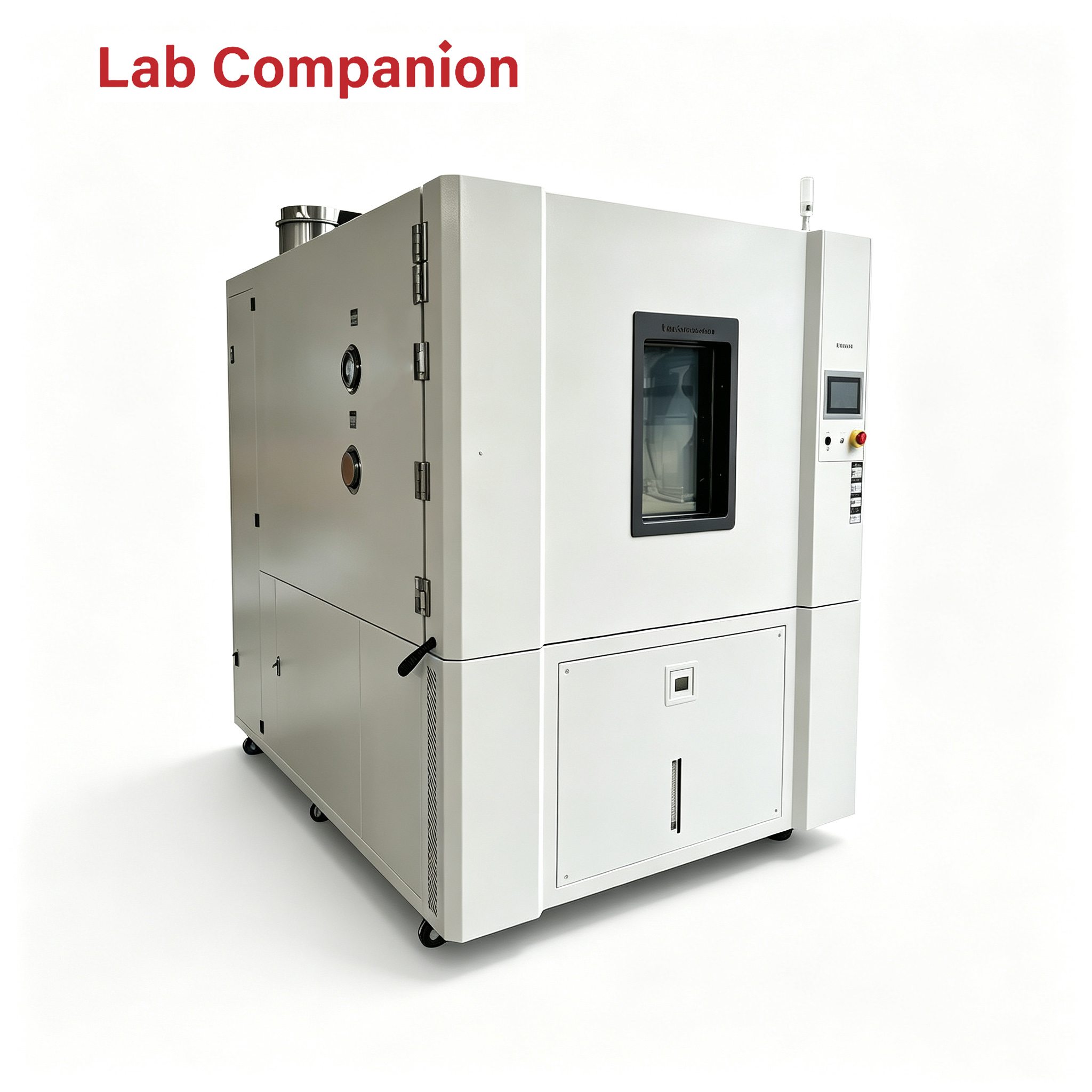
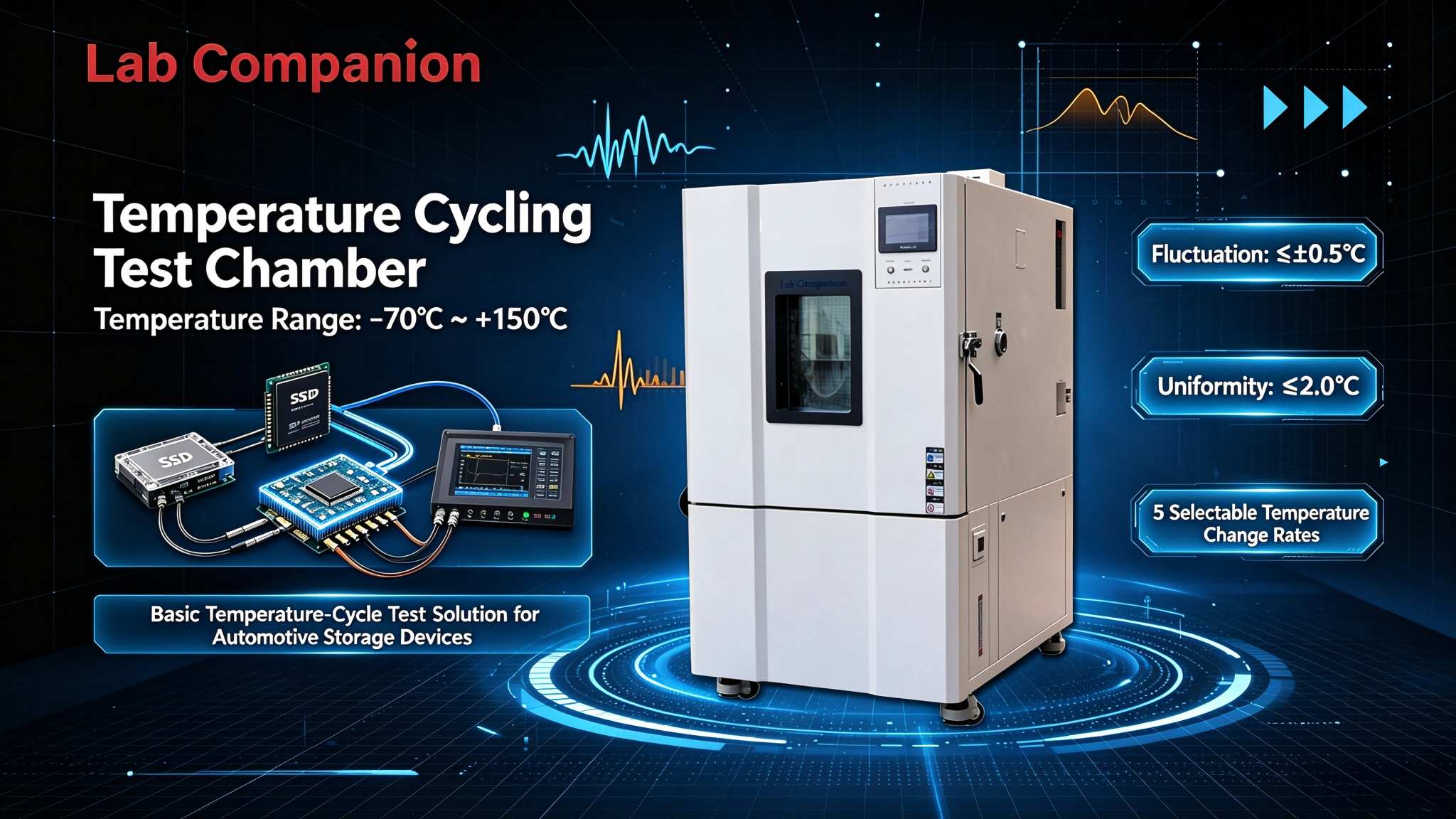
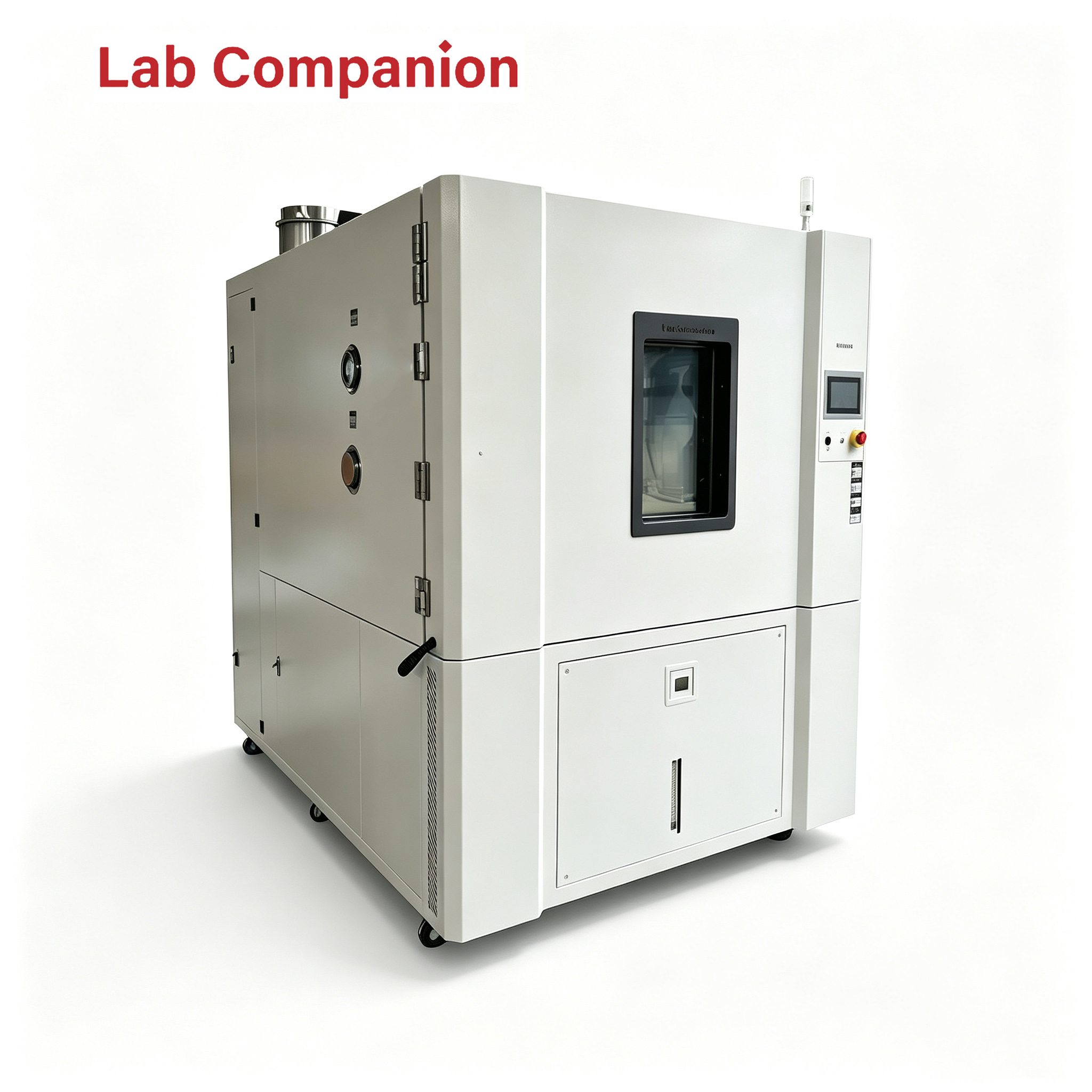
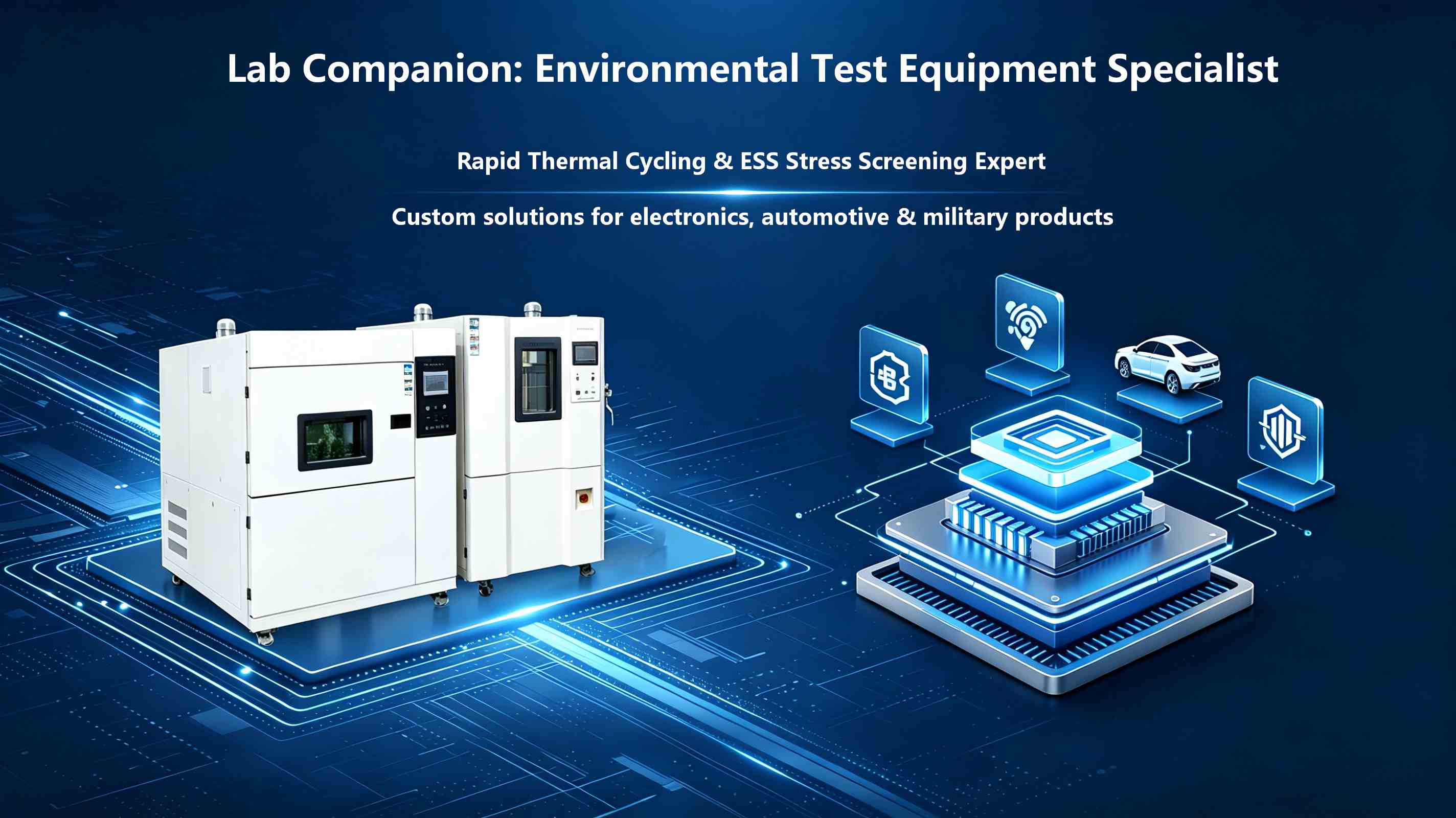
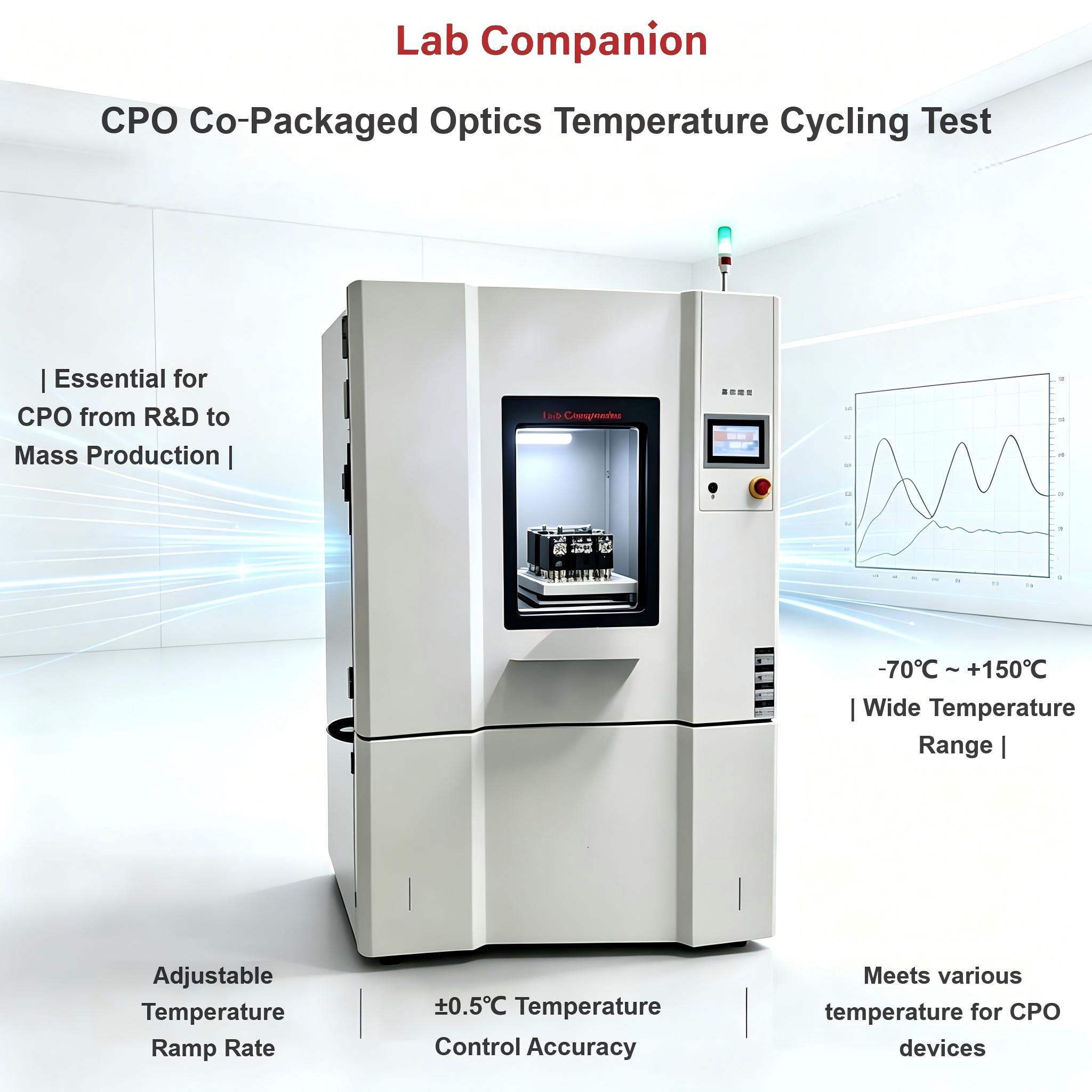
In modern manufacturing—especially in high-reliability sectors such as electronics, automotive, and aerospace—product quality and service life depend not only on design and materials, but also on a rigorous, repeatable validation system. Thermal shock testing, one of the most stringent procedures in environmental reliability testing, serves as a core pillar of this system. It simulates the stress products endure under rapid, extreme temperature changes to reveal potential material defects, solder failures, and assembly issues.
Lab Companion deeply understands this logic. The company provides not just thermal shock test chambers, but complete solutions that help enterprises build standardized, reliable reliability verification capabilities. Through its profound understanding and practice of “standardized validation”—a fundamental industry need—Lab Companion has established a unique value position in the professional field.
I. Core Value: Beyond Equipment, Building Trustworthy Validation Capabilities
For any quality-focused enterprise, the ultimate goal of investing in a thermal shock test chamber is to obtain credible, traceable, and standard-compliant test data. Such data supports design improvement, ensures mass production consistency, and acts as a “technical passport” for customer approval and market access.
Lab Companion’s philosophy centers on how to guarantee the authority and validity of test data.
1. Standard Compliance and Repeatability of Test Conditions
Equipment must accurately reproduce conditions defined by standards including GB/T 2423.22, IEC 60068-2-14, and automotive standards such as AEC-Q100. These standards impose strict requirements on temperature transition time, dwell time, temperature extremes, and recovery time.
Lab Companion’s equipment is designed to meet these standards from the outset. Its two-zone fast mechanical switching (<10 seconds) and three-zone precision airflow control minimize variables, ensuring consistent, traceable conditions for every test.
2. Long-Term Stability for Consistent Data Over Time
Reliability testing often involves long-term, repeated cycling. While performance during acceptance is important, stability over hundreds or thousands of harsh thermal shock cycles is critical.
Lab Companion enhances structural durability, uses long-life core components (compressors, sensors), and conducts rigorous factory aging tests to reduce performance degradation. This ensures quality data remains comparable and reliable for months or even years.
3. Auditable Test Processes and Data Chains
In modern supply chains, test reports must themselves be verifiable. Lab Companion’s intelligent control system acts as a guardian of data integrity, recording temperature profiles, transition timestamps, operation logs, and equipment status in tamper-proof electronic records.
This is essential for enterprises pursuing ISO/IEC 17025 accreditation or providing original test evidence to clients.
II. Product Design Engineered for Standardized Validation
Every detail of the Lab Companion thermal shock test chamber is built to support standardized verification.
Clear performance boundaries: Specifications include not only no-load performance but also performance curves under real load conditions, helping users match equipment to actual samples.
Reliability in critical details: Optimized airflow ensures temperature uniformity under load; redundant safety interlocks prevent operational errors; convenient calibration ports support traceable third-party metrology.
Modularity and scalability: Flexible electrical and communication interfaces (including LIMS integration) support future upgrades and custom fixtures, protecting long-term investment.
III. Solving Industry Pain Points: From “Having Equipment” to “Having Capability”
Many enterprises face common challenges when adopting thermal shock testing. Lab Companion delivers value beyond hardware:
1. “Multiple standards exist—how to select and implement?”
The technical team assists in interpreting standards based on industry (consumer electronics, automotive, military) and product characteristics, providing compliant test configurations.
2. “Inconsistent results: equipment or sample?”
Support goes beyond troubleshooting. The team helps analyze test methods, sample mounting, and sensor placement, turning equipment into a reliable diagnostic tool.
3. “How to turn data into quality improvement?”
Standard, reliable test data establishes a quality baseline. By comparing results across designs and batches, enterprises quantify improvements driven by reliability testing.
IV. Selection Guidance: Start with the End in Mind
We recommend a structured approach to selecting a thermal shock chamber:
Clarify verification objectives: certification, R&D screening, or quality monitoring? This defines performance rigor.
Define test load: sample size, weight, material, heat capacity, and operating status. This determines two-zone / three-zone type and chamber size.
Evaluate process capability (Cpk): Focus on long-term stability, not just nominal specs. Inquire about drift data and calibration cycles.
Assess supplier empowerment: Choose a partner that explains standard compliance, data reliability, and provides full lifecycle support.
Conclusion
As manufacturing competition increasingly focuses on quality and reliability, a high-performance, stable thermal shock test chamber becomes a cornerstone of an enterprise’s quality defense.
Lab Companion delivers more than standard-compliant hardware. By partnering with customers to build standardized, trustworthy validation processes, it helps transform abstract “reliability” into measurable, controllable, and improvable engineering practice.
Choosing Lab Companion means choosing a long-term partner dedicated to empowering your product quality upgrade through professional equipment and expertise.
Thermal shock test chambers are critical equipment for R&D and laboratory testing, used primarily to simulate extreme rapid temperature change environments and verify product structural stability and performance reliability under severe thermal shock. Proper equipment selection directly determines test data accuracy, service life, and long-term operation and maintenance costs.
In actual procurement, many companies and laboratories fall prey to manufacturers’ exaggerated parameters and overhyped concepts, resulting in incorrect selection decisions. This not only wastes procurement budgets but also delays testing schedules and product development efficiency.
Guangdong Lab Companion has over 21 years of expertise in environmental reliability test equipment. Our TS2 (two-zone) and TS3 (three-zone) thermal shock test chambers are trusted by global customers for their robust technology and fully transparent specifications. Based on real product parameters and practical experience in international projects, we break down the 3 most common technical pitfalls and provide practical solutions to help you select the right equipment.
Pitfall 1: Exaggerated Thermal Shock Speed – Trust Only Verifiable Real Parameters
The most common trap is false claims about temperature shock speed, where actual transition time differs drastically from advertised values.
Many manufacturers claim a “temperature transition time ≤5 seconds,” but real performance often exceeds 15 seconds, resulting in ineffective thermal shock and failure to replicate real-world extreme conditions.
Do not rely solely on marketing claims; verify structural design and testable parameters.
All Lab Companion specifications are third-party testable and fully traceable:
• TS2 Two-Zone Model: High-precision pneumatic basket design ensures stable sample movement, with actual temperature transition time ≤10 seconds, matching rated performance.
• TS3 Three-Zone Model: Equipped with patented air damper assembly (Patent No. CN 217084555 U), featuring excellent airtightness to eliminate cross-interference between zones. Transition efficiency is 30% higher than traditional models.
Both series feature a temperature range of -65℃ ~ +150℃ with no parameter exaggeration, enabling accurate reproduction of extreme thermal shock environments.
Pitfall 2: Unqualified Temperature Recovery Time – Severe Impact on Testing Efficiency
The second major issue: excessively long temperature recovery time, which drastically reduces testing productivity.
A core requirement of thermal shock testing is rapid temperature transition and stable temperature control. Long recovery times directly extend test cycles.
Many manufacturers claim “recovery time ≤5 minutes,” while actual performance often takes 8–10 minutes with large temperature fluctuations.
Lab Companion optimizes refrigeration and heating systems to solve this pain point:
• Cascade refrigeration system with premium imported compressors and environmentally friendly refrigerant
• Stainless steel heaters and PID precise temperature control for dynamic energy compensation
• After switching samples from -55℃ to 125℃, temperature recovery time stably ≤5 minutes
• Temperature fluctuation ≤±0.5℃, temperature uniformity ≤±2℃
Fully compliant with GB 10592-2008, IEC 60068-2-14 and other international standards, ensuring high testing efficiency and reliable data.
Pitfall 3: Poor Test Space Design – Low Compatibility and Potential Safety Risks
The third easily overlooked pitfall: inadequate interior chamber design, leading to poor compatibility and safety hazards.
To cut costs, some manufacturers use low load capacity and inferior interior materials, which fail to fit various sample sizes and may deform under repeated thermal cycling, shortening equipment life.
Lab Companion TS2 / TS3 series are engineered for international customer applications:
• Sample load capacity ranges from 2.5 kg to 15 kg, suitable for small electronic components, medium-sized parts, and more
• Interior chamber: SUS304 stainless steel; exterior: powder-coated cold-rolled steel with heavy-duty insulation layer for energy efficiency and deformation resistance
• Comprehensive safety protection: over-temperature protection, leakage protection, compressor overload protection, etc.
• Explosion-proof modules available for hazardous samples, eliminating safety risks
Extra Tips: 2 Commonly Overlooked Selection Mistakes
1. Focusing only on component brands, ignoring system integration capability
Imported parts do not guarantee high performance. System matching and control algorithms are critical.
Lab Companion uses premium imported compressors, Siemens PLC and 7-inch color touchscreen, combined with optimized air duct and control logic, achieving over 20% lower energy consumption than comparable industry models.
2. Blindly pursuing extreme low temperatures, ignoring actual testing requirements
Over-specification increases unnecessary procurement and operating costs.
Lab Companion supports full customization: temperature range, chamber size, load capacity, interfaces and more can be tailored to avoid waste.
Core Selection Principles: 3 Rules for Accurate, Risk-Free Purchase
For international customers, focus on three key factors:
1. Genuine, verifiable parameters (no exaggeration)
2. Compatibility with your samples and testing scenarios
3. Manufacturer’s technical strength and global service capability
With 21 years of manufacturing experience, Guangdong Lab Companion provides real, testable specifications for all products.
TS2 and TS3 thermal shock test chambers cover two-zone and three-zone configurations, meeting major international testing standards. Supported by a global service network for fast response and local support, we help you obtain stable, reliable and cost-effective test equipment to support your product R&D and quality control.
When the industry discusses the ranking of high and low temperature test chambers and selects the top 10, the core criteria are never a simple accumulation of equipment parameters, but whether the equipment can be deeply integrated into the rigorous R&D and quality inspection system, serving as a solid cornerstone for supporting product reliability engineering. The LabCompanion® high and low temperature test chamber series, with its positioning as a "trustworthy testing partner", has not only maintained a leading position in various rankings of high and low temperature test chambers through long-term market practice, but also silently verified the extreme performance of products in core projects in many key fields such as chips, automobiles, and semiconductors, becoming an industry benchmark.
I. Four Core Criteria for Selecting the Top 10 High and Low Temperature Test Chambers
Aspect 1: Precise Temperature Control and Quality Stabilization, Upgrading from "Data Provider" to "Risk Mitigator"
The accuracy of test data is the core competitiveness of high and low temperature test chambers, and even the primary prerequisite for being selected into the top 10 rankings. With excellent temperature fluctuation control and uniformity, LabCompanion® high and low temperature test chambers can effectively avoid environmental noise interference, accurately capture tiny performance attenuation of products, expose potential defects in advance, and fundamentally reduce R&D and mass production risks. For example, in the testing of new energy vehicle battery modules, tiny temperature gradient differences may directly affect the accuracy of evaluating the thermal management performance of battery packs, thereby laying a huge hidden danger of mass production recalls. The high-precision temperature control capability of LabCompanion® equipment ensures the uniqueness and reliability of test conclusions, minimizing test errors, which is also the core technical strength for it to maintain a leading position in the high-end high and low temperature test chamber industry ranking.
Aspect 2: Ensuring Test Continuity to Empower R&D Efficiency Upgrade
Interruptions in R&D and quality inspection processes often mean huge time and cost losses. Therefore, the stability of equipment is the key soft power for selecting the top 10 high and low temperature test chambers. LabCompanion® accurately addresses this pain point of customers, focusing on enhancing reliability in equipment design, adopting core components of well-known brands and system architectures verified by long-term market practice, and striving for extremely low failure rates and long mean time between failures. At the same time, the equipment integrates a number of humanized designs - the anti-condensation large viewing window facilitates real-time observation of test status, the adjustable controller adapts to different operating habits, and the convenient data export interface avoids data loss, comprehensively reducing the risk of manual operation interruptions. For industries such as semiconductors and optical devices that need to carry out long-term temperature cycle and high-low temperature dwell tests, the long-term stable operation of the equipment is not only a guarantee of the project cycle, but also a core support for the R&D rhythm. This intangible value is far beyond the price of the equipment itself, becoming an important weight for it to be selected into the top 10 rankings.
Aspect 3: Balancing Compliance and Flexibility to Meet the Challenges of Global Supply Chains
With the intensification of the global layout of the manufacturing industry, products need to meet the requirements of multiple standards in multiple countries and fields. Therefore, the standard compliance and scenario adaptability of equipment have become important indicators for selecting the top 10 high and low temperature test chambers. The LabCompanion® high and low temperature test chamber has built-in compliance design, which can directly meet a number of rigorous requirements such as national standards (GB/T 2423.1), military standards (GJB 150.3A), and International Electrotechnical Commission standards (IEC), providing customers with a "one-stop" compliant testing platform that can meet global quality inspection needs without additional adaptation. At the same time, the equipment covers a variety of standard models from 100L to 1500L, and supports in-depth non-standard customization, which can flexibly adapt to the full-scenario needs of incoming inspection (IQC), R&D pilot test, and finished product factory inspection (OQC) of enterprises of different sizes, serving as a standardized interface connecting the quality discourse power of the global supply chain and demonstrating its comprehensive adaptability.
Aspect 4: Full-Life-Cycle Services to Forge Long-Term Cooperation Value
The value of a truly high-end equipment is never limited to the moment of delivery. Perfect full-life-cycle services are the core bonus item for selecting the top 10 high and low temperature test chambers. LabCompanion® has always adhered to the concept that "delivery is the starting point of service", providing customers with not only a piece of equipment, but also a full-process solution covering pre-sales technical consultation, in-sales installation and commissioning, after-sales maintenance support, and regular calibration services. This service concept oriented to customers' long-term success has enabled the brand to maintain a high customer retention rate and recommendation rate after being tested by the market cycle. Compared with short-term marketing hype, this accumulated brand credibility is the core strength for it to maintain a leading position in various professional rankings of high and low temperature test chambers and be selected into the top 10 list.
II. Core Evaluation Dimensions for Cost-Effectiveness of High and Low Temperature Test Chamber Manufacturers
Evaluating the cost-effectiveness of high and low temperature test chamber manufacturers is never "low price first", but "value matching" - that is, the comprehensive balance between equipment performance, service quality and price. It can be judged from three core points: first, the matching degree between core performance and demand. Prioritize equipment whose temperature control accuracy, stability and compliance meet the needs of your own industry to avoid waste caused by blindly pursuing high-end parameters; second, the later operation and maintenance cost of the equipment, including the service life of core components, the cost of consumable replacement, and the efficiency of fault maintenance.
LabCompanion® can significantly reduce long-term operation and maintenance costs by virtue of high-quality core components and perfect after-sales service; third, service added value. Professional technical consultation, rapid after-sales response, and regular calibration services can effectively improve equipment utilization and reduce downtime losses, which is also an important embodiment of high cost-effectiveness.
Conclusion
In the view of LabCompanion® , a high and low temperature test chamber is never a simple collection of hardware, but a key system that carries customers' quality commitments and supports products to enter the market. It stands quietly in the laboratory, but deeply participates in every link of product reliability improvement, becoming a behind-the-scenes contributor to the quality upgrade of Made in China. In the future, LabCompanion® will continue to deepen its positioning as the "cornerstone of reliability testing", consolidate and enhance its core position in the global reliability testing field through more intelligent and interconnected technological iterations, and help Made in China win world trust with excellent quality.
About LabCompanion®
LabCompanion® is a leading provider of environmental reliability test equipment and solutions, always taking "helping customers improve the intrinsic quality of products" as its mission. With high-precision, high-reliability test equipment and professional and comprehensive full-life-cycle services, Hongzhan Technology has become a trustworthy long-term partner for many advanced manufacturing enterprises and scientific research institutions in China and even the world on the road of quality and reliability improvement.
In environmental reliability testing, temperature test chambers and thermal shock test chambers are two core instruments designed to verify the performance stability of products under extreme temperature conditions. However, they differ significantly in temperature change mode, test objectives, core parameters, and application scenarios.
As a national high-tech enterprise with over 20 years of industry experience, Lab Companion. leverages mature R&D and manufacturing capabilities to provide comprehensive environmental testing solutions across multiple industries. This article compares the two types of chambers from three dimensions: core parameters, structural design, and application scenarios, and offers targeted selection advice based on Lab Companion’s product features to help enterprises select the optimal testing equipment.
1. Core Performance Parameters: Fundamental Difference Between Gradual & Sudden Temperature Change
The core distinction between the two instruments lies in their design positioning for temperature change modes:
• Temperature Test Chamber: Gradual temperature change, steady-state constant temperature
• Thermal Shock Test Chamber: Sudden temperature shock, rapid switching
1.1 Temperature Range & Temperature Change Rate
Temperature Test Chamber
• Temperature range: Standard -70℃ ~ 150℃; customizable up to -100℃ ~ 200℃
• Temperature change feature: Average gradual rate; standard heating ≈ 5℃/min, cooling ≈ 3℃/min
• Rapid temperature change model: Equipped with dual-stage compression + eco-friendly refrigerant, with a rate of up to 20℃/min, suitable for accelerated aging tests
Lab Companion Thermal Shock Test Chamber (TS Series)
• Temperature range: Standard -65℃ ~ 150℃; customizable to -80℃ ~ 200℃
• Core advantage: Instant temperature switching (instead of average rate)
• Two-zone (TS2): Temperature transfer time ≤ 30 seconds, ≤ 10 seconds for small samples
• Three-zone (TS3): Equipped with pre-heating & pre-cooling chamber design, featuring higher switching efficiency and more stable shock performance
1.2 Temperature Uniformity & Fluctuation
Temperature Test Chamber
• Focuses on the accuracy of steady-state temperature field
• No-load uniformity ≤ ±2℃ (up to ±1.5℃)
• Fluctuation ≤ ±0.5℃; precision model up to ±0.3℃
• Ideal for long-term constant temperature and cyclic gradual change tests
Thermal Shock Test Chamber
• Slightly wider stability tolerance due to frequent temperature switching
• Uniformity ≤ ±1.5℃
• Fluctuation: Three-zone ≤ ±0.3℃, Two-zone ≤ ±0.5℃
• Equipped with dedicated PID algorithm for dynamic temperature control, reducing overshoot and ensuring consistent shock accuracy
1.3 Core Parameter Comparison (Compact Version)
Parameter
Temperature Test Chamber
Thermal Shock Test Chamber (TS Series)
Temperature Range
Standard: -70℃ ~ 150℃;Custom: -100℃ ~ 200℃
Standard: -65℃ ~ 150℃;Custom: -80℃ ~ 200℃
Temperature Change
Gradual change, average 0.5~20℃/min
Sudden thermal shock, transfer ≤ 30s, recovery ≤ 5min
Uniformity / Fluctuation
Uniformity ≤ ±2℃ (±1.5℃), Fluctuation ≤ ±0.5℃
Uniformity ≤ ±1.5℃, Fluctuation ±0.3~±0.5℃
Cycle Programming
1~999 programmable cycles, multi-segment curves
1~999 adjustable cycles, supports continuous shock
2. Structural & System Design: Differentiated Architectures for Diverse Temperature Change Needs
2.1 Refrigeration System
Temperature Test Chamber
• Above -40℃: Single-stage compression refrigeration
• Low-temperature range: Dual-stage cascade system with imported brand compressors
• Full-capillary automatic load regulation, ensuring precise temperature control and over 30% lower energy consumption
Thermal Shock Test Chamber (TS Series)
• Binary cascade air-cooled refrigeration system (high-temperature + low-temperature circuits)
• Adopts eco-friendly refrigerants R23/R404A, compliant with environmental protection regulations
• Mean Time Between Failures (MTBF) > 8,000 hours
2.2 Chamber & Air Duct Design
Temperature Test Chamber
• Single-chamber structure, inner tank made of SUS304 mirror stainless steel
• High-density polyurethane foam + silicone rubber seal, achieving superior thermal insulation performance
• 3D circulating air duct (top supply, bottom return), ensuring uniform temperature field and high versatility
Thermal Shock Test Chamber
• Two-zone (TS2): Equipped with pneumatic basket for direct sample transfer between hot and cold chambers; compact structure and cost-effective
• Three-zone (TS3): Additional intermediate transition chamber to reduce hot-cold air interference, lower temperature loss and improve precision – ideal for precision samples
• Inner tank: SUS304 stainless steel; outer cabinet: anti-corrosion electrolytic plate with paint finish
2.3 Control System
Temperature Test Chamber
• Siemens PLC + 7-inch touchscreen
• 100+ programs storage, 99 segments per program
• Segmented PID + AI adaptive control, with 99.5% data repeatability
Thermal Shock Test Chamber
• Youyi E-560/600 or 7.5-inch color touchscreen
• 96 program storage slots, embedded PLC for dynamic load adaptation
• Standard RS-232/RS485 interface, supporting data export and remote monitoring
3. Test Functions & Application Scenarios: Precise Matching for Industry Testing Needs
3.1 Temperature Test Chamber: General-Purpose Gradual Temperature Change Testing
Core Purpose
Simulate gradual temperature environments such as diurnal temperature variation and seasonal alternation; support constant temperature, high-low temperature cycling, and multi-segment programmable testing.
Applicable Industries
• Standard model: Consumer electronics, home appliances, plastics, hardware, and other general temperature resistance verification
• Rapid temperature change model: New energy, automotive electronics, 5G communications, aerospace, and other accelerated aging & cyclic reliability tests
• Customizable: Explosion-proof, anti-corrosion, large-volume, low-humidity, and other special working conditions
3.2 Thermal Shock Test Chamber: Severe Sudden Temperature Change Testing
Core Purpose
Simulate instantaneous extreme temperature changes during transportation or operation; evaluate cracking, failure, and performance drift caused by thermal expansion and contraction of materials.
Applicable Industries
• Aerospace: Instant temperature change between high altitude and ground
• Automotive components: Shock from cold start to high-temperature driving
• Harsh reliability verification for electronics, metals, rubber, military, and other fields
• Two-zone: Suitable for scenarios with limited budget and general thermal shock requirements
• Three-zone: Suitable for high-standard requirements (ISO, GB/T, etc.) in precision electronics, military, and other fields
4. Core Selection Logic & Precautions
Selection Priority: Demand Matching > Blind High Configuration
By Temperature Change Mode
• Gradual change & long-term steady state → Choose temperature test chamber
• Instant sudden change & thermal shock → Choose thermal shock test chamber
By Industry & Standards
• Consumer electronics, home appliances, basic materials → Temperature test chamber for better cost performance
• New energy, automotive, aerospace, military → Rapid temperature change chamber or three-zone thermal shock chamber
By Budget & Maintenance
• Temperature test chamber: Simple structure, low procurement and maintenance costs
• Thermal shock test chamber: Multi-chamber + cascade refrigeration, with slightly higher cost and maintenance requirements
Safety & After-Sales (Lab Companion Standard)
• 12 safety protection functions: Over-temperature, overload, compressor overheating, water shortage, fan failure, etc.
• National after-sales service network, providing regular maintenance guidance to ensure long-term stable operation
Conclusion
Temperature test chambers and thermal shock test chambers are not substitutes but complementary for different scenarios:
• Temperature Test Chamber: General-purpose, gradual change, steady state, cost-effective
• Thermal Shock Test Chamber: Severe, sudden change, shock-resistant, high-reliability verification
By combining product characteristics, industry standards, and test objectives with <span
The three core functions of high-low temperature test chambers—constant temperature, high-low temperature cycling, and programmable operation—extensively cover environmental reliability testing requirements across industries including electronics, automotive, military, photovoltaic, and more.
As a high-tech enterprise with over 20 years of expertise in environmental reliability testing equipment, Lab Companion specializes in the R&D and manufacturing of environmental test equipment. Its products feature precise temperature control and customizable capabilities to adapt to diverse industry applications.
Understanding the core operation, practical techniques, and selection logic of each function enables precise matching to different test scenarios, effectively improving test efficiency and data reliability. Based on Lab Companion’s mature product technologies and industry practical experience, we provide the following concise professional guide.
1. Constant Temperature Test: Basic Temperature Resistance Verification
Core Purpose
Used for long-term performance testing of products under a single extreme temperature condition. It is the most common basic test mode for mass quality inspection and preliminary R&D, with easy operation and strong versatility.
Typical Applications
- High-temperature aging test of semiconductor components at 85°C- Low-temperature embrittlement verification of automotive rubber seals at -40°C- Constant-temperature storage stability testing of in vitro diagnostic reagents for medical devices at 50°C
Key Operational Points
- Prioritize models with temperature fluctuation ≤ ±0.5°C and uniformity ≤ ±2°C; high-precision versions achieve ±0.1–±0.3°C.- Standardized sample placement: sample volume ≤ 1/3 of working chamber volume, distance from chamber walls ≥ 5 cm to avoid blocking air ducts and compromising temperature uniformity.
Product Features (Lab Companion)
- Inner chamber made of SUS304 mirror-finish stainless steel for corrosion resistance and easy cleaning.- High-density polyurethane foam insulation and high-strength heat-resistant silicone gaskets minimize heat exchange and enhance temperature stability.- Custom ultra-low temperature models below -100°C available for military applications, fully compliant with GJB military standards.
2. High-Low Temperature Cycling Test: Thermal Cycling Reliability Testing
Core Purpose
Simulates temperature alternating environments such as day-night temperature differences, regional transportation, and seasonal changes encountered in real-world use. It rigorously verifies structural strength and performance stability, with stricter evaluation than constant temperature testing.
Typical Applications
- Thermal cycling test of new energy vehicle power batteries from -30°C to 85°C (simulating winter-summer conditions)- High-low temperature cycling verification of photovoltaic modules- Wide-temperature-range alternating performance testing of aerospace composite materials
Key Operational Points
- Standard models: heating rate up to 5°C/min, cooling rate up to 3°C/min.- High-performance models: two-stage compression refrigeration + eco-friendly refrigerant, stable temperature change rate up to 20°C/min, greatly shortening test cycles.- Enable PID auto-tuning to limit temperature overshoot within 0.8°C for accurate data.
Product Features (Lab Companion)
- Equipped with Balanced Temperature Control (BTHC) system for precise execution of preset cycling programs, preventing damage from sudden temperature changes.- Full-capillary automatic load adjustment system delivers higher accuracy and stability than conventional expansion valves, while reducing energy consumption by more than 30%.
3. Programmable Test: Automated Simulation of Complex Working Conditions
Core Purpose
Supports multi-segment linked programming of temperature and time parameters, enabling fully automatic operation of complex test sequences without manual supervision. Ideal for customized R&D testing and standardized quality inspection.
Typical Applications
- Multi-region temperature environment simulation for 5G base station PCBs- 1000-hour long-term cyclic aging testing of electronic components- Multi-temperature gradient verification for military-grade products
Key Operational Points
- Select models supporting at least 100 program groups (expandable to 200), with up to 99 segments per program.- Set segmented PID parameters according to thermal inertia differences between high and low temperature ranges for improved full-range accuracy.
Product Features (Lab Companion)
- Siemens PLC control + 7-inch color touchscreen for intuitive and stable operation.- AI adaptive algorithm ensures test data repeatability up to 99.5%.- Supports USB, RS485, and Ethernet communication for remote monitoring and real-time data export.- Automatically generates GLP-compliant test reports; power-off memory function resumes testing automatically after power restoration to prevent data loss.
4. Selection & Operation Guidelines
1. Selection Logic
- Basic quality inspection: Choose constant temperature models for optimal cost-effectiveness.- Product reliability validation: Select cycling models; fast temperature change versions recommended for new energy and automotive industries.- R&D or complex conditions: Choose programmable models.- Military & aerospace: Custom options available for low pressure, explosion-proof, and other non-standard functions.
2. Safety & Maintenance
- Equipment must include multiple protections: over-temperature, overload, compressor overheating, etc.- Regularly clean air ducts, inspect door gaskets, and calibrate temperature sensors every 3–6 months to extend service life and maintain accuracy.
3. Customization Options
Optional accessories available based on industry needs: test ports, data loggers, explosion-proof chambers, water purification systems, etc., to meet special testing requirements in medical, chemical, military, and other fields.
Conclusion
The three core functions of high-low temperature test chambers provide complete testing coverage from basic verification to high-precision simulation. By selecting the appropriate function based on product characteristics, industry standards, and test requirements—paired with equipment featuring precise temperature control, stable performance, and customization—along with standardized operation and maintenance, users can maximize equipment value and provide reliable assurance for product quality.
In environmental simulation testing, temperature chambers’ control accuracy, rate stability and energy efficiency directly determine test data reliability and cost-effectiveness. With over 20 years of technical expertise, Labcompanion integrates dual PID temperature control and energy compensation into its chambers, breaking the traditional trade-off between accuracy and efficiency. It delivers high precision, fast response and low energy consumption, meeting stringent demands in automotive, semiconductor, military and other industries. This document analyzes the two core technologies from technical principles, collaborative advantages and application scenarios.
I. Dual PID Temperature Control: Core of Precise Temperature Regulation
Upgraded from traditional single PID, Labcompanion’s dual PID system integrates AI fuzzy algorithm to achieve intelligent adaptive control, with core advantages as follows:
• Dual-loop control: Takes temperature deviation and temperature change rate as input variables, dynamically optimizes PID parameters via fuzzy reasoning, and adapts to samples with different heat capacities without manual intervention.
• Temperature-humidity independence: Integrates water vapor partial pressure control to avoid coupling interference, with humidity fluctuation controlled at ±1%~±3%RH.
• Low-temperature performance: Independent closed-loop control by refrigerators reduces internal energy loss; temperature fluctuation stabilizes at ±0.1~±0.5℃, 30% more accurate than traditional equipment.
• Rate & program compatibility: 0.1℃/min~20℃/min full-range rate (20℃/min under load for T-200-20 model); built-in standard program templates, supports 200+ custom programs, compatible with GB/T, GJB, JEDEC standards.
II. Energy Compensation: Guarantee for Efficiency & Stability
Labcompanion’s energy compensation technology addresses energy loss and temperature zone crosstalk through hardware-software synergy, with key advantages as follows:
• Hardware optimization: Equipped with inverter compressors, binary refrigeration system and plate heat exchangers to adjust cooling/heating power dynamically; energy storage design for high-low temperature switching reduces energy consumption; 3-second pneumatic dampers control energy crosstalk within ±1℃ for three-chamber models.
• Intelligent energy adjustment: Deeply linked with dual PID + AI algorithm, adjusts compensation strategies in real time; energy consumption during constant temperature is reduced by over 40%.
• Green compliance: Binary cascade refrigerant configuration (R404A for high-temperature cycle, R23 for low-temperature cycle) meets dual-carbon goals.
III. Synergistic Advantages of Dual Technologies
• Maintains ±0.5℃ deviation and ≤±2℃ uniformity even at 20℃/min high-speed temperature change (under load), avoiding sample damage.
• Balances energy consumption and stability, reducing fault shutdown rate for long-term cycle tests.
• Covers -70℃~180℃ conventional temperature range (extendable for customized models), adapting to diverse test needs.
• Modular design: Two-chamber models for batch screening (basket moving time ≤10s); three-chamber models for precision power-on tests.
IV. Industry Applications
• Automotive components: Simulates -40℃~125℃ driving cycle temperature changes, compatible with condensation tests and ISO 16750-4 standard.
• Semiconductor & automotive electronics: 150L~1000L full-spec models for small-batch tests; ±0.1~±0.3℃ control accuracy meets JEDEC standards, exposing chip defects.
• Military: Complies with GJB 150.3A/GJB 150.4A standards; supports high-voltage explosion-proof and ultra-low temperature (-220℃ standard for customized models) configurations, serving aerospace and military equipment testing.
V. Summary
Dual PID temperature control ensures precision, while energy compensation achieves energy saving. Together, they realize three-dimensional optimization of precision, efficiency and energy consumption. Labcompanion provides customized solutions for various industries, supporting laboratory intelligence and green upgrading, and helping enterprises improve product reliability and reduce test costs.
In environmental simulation testing, high-speed temperature control equipment is essential for verifying product reliability under extreme temperature variations. Guangdong Labcompanion Technology’s fast temperature change test chamber and thermal shock test chamber, both featuring high-speed temperature control, serve aerospace, military electronics, automotive new energy and other stringent industries. Though similar in core function, they have distinct principles and applicable scenarios.
Common Features
Both chambers are engineered to simulate extreme temperature fluctuations, supporting R&D and military testing. They meet international and domestic standards including GJB, MIL-STD, IEC. Fitted with Labcompanion’s intelligent control system, they enable curve programming, data export and remote monitoring. Built with robust structures and high-efficiency heating/cooling systems, some models adopt eco-friendly R404A refrigerant.
Core Differences
Item
Fast Temperature Change Test Chamber
Thermal Shock Test Chamber
Working Principle
Single-chamber, continuous & smooth gradual temperature change
Two/three-zone switching, instantaneous shock via rapid sample transfer
Key Parameters
Adjustable rate: 5–20℃/min; Temp range: -70℃–180℃; Supports humidity control
Temperature difference >150℃; Sample transfer time ≤10s; Fixed shock mode
Application Scenarios
Gradual temperature change tests for new energy batteries, automotive electronics, consumer electronics
Instant temperature shock tests for aerospace components, military equipment, automotive glass
Applicable Standards
IEC 60068-2-38, GB/T 2423.22
IEC 60068-2-14, MIL-STD-810H
Selection Recommendations
No absolute superiority exists between the two models. Select the fast temperature change chamber for gradual, adjustable temperature change tests, which offers higher cost-effectiveness for mass R&D and testing. Choose the thermal shock chamber for instantaneous extreme temperature shock tests in aerospace and military fields, with higher budget for operation and maintenance. Selection should be based on test standards, sample characteristics and budget.
In the reliability testing of electronics, automotive and semiconductor industries, rapid temperature change and high-low temperature shock test chambers are core devices. Both simulate temperature environments but differ significantly in technical logic, test purposes and applicable scenarios. Improper selection may cause distorted test data and delayed R&D cycles. Based on practice, this article analyzes their core differences and provides scientific schemes for accurate model selection.
I. Core Technical Differences: Principles and Parameters
The core difference lies in temperature change mechanisms, leading to variations in parameters and structural design, addressing different test pain points.
(I) Working Principle: Continuous Gradient vs. Instant Switching
Rapid temperature change chambers realize stable temperature rise/fall at a set rate via cascade refrigeration and heating modules, simulating progressive temperature changes. They precisely control temperature slope to avoid overshoot.
High-low temperature shock chambers adopt a two/three-chamber structure, transferring samples between temperature zones in seconds to simulate sudden cold/heat shocks. Their core is to test material tolerance via thermal stress from sudden temperature changes.
(II) Key Parameters: Different Focuses
Rapid temperature change chambers focus on load temperature change rate, control accuracy and uniformity (typical range: -70℃~180℃), suitable for accelerated life testing and compliant with relevant standards.
High-low temperature shock chambers focus on temperature recovery time and extreme range (-80℃~200℃), with fast recovery, suitable for extreme condition simulation and equipped with sample protection.
(III) Structural Design: Single-Chamber vs. Multi-Chamber
Rapid temperature change chambers have a compact single-chamber design for space-limited laboratories and support automatic docking. Shock chambers are larger with independent zones, optimized to reduce crosstalk and customizable with explosion-proof modules.
II. Application Scenario Guide
(I) Rapid Temperature Change Test Chamber
Suitable for slow temperature changes, it is used for functional stability and accelerated life testing in automotive electronics, consumer electronics and communications.
(II) High-Low Temperature Shock Test Chamber
Suitable for instant temperature changes, it tests material and packaging reliability in semiconductors and aerospace, pre-exposing thermal expansion-related defects.
III. Selection Decision and Manufacturer Advantages
Selection core: Match product environment and test purpose — rapid chambers for gradient stability; shock chambers for extreme tolerance; large/high-heat samples prefer rapid chambers.
Domestic brand advantages: High cost-performance (lower price/energy consumption than imports), strong customization and efficient localized after-sales services.
IV. Conclusion
The two devices are complementary. Selection should align with actual working conditions, not just parameters. High-quality domestic brands provide standardized and customized solutions, supporting domestic equipment replacement for reliable testing.
In industrial testing and scientific research, Lab Companion’s environmental test chambers are essential for product reliability verification, widely applied in electronics, automotive, aerospace, home appliances and other sectors. Both chambers focus on temperature range simulation and are easily confused in selection, yet differ sharply in core functions and application scenarios. This guide clarifies their key similarities, differences and scientific selection logic for optimal matching.
I. Key Commonalities
Both are artificial environmental simulation devices for evaluating product stability in extreme temperatures, providing data support for R&D, mass production testing and quality control, and complying with GB, IEC, ISO and other international standards.
1. Overlapping temperature range: -70℃~150℃ for high and low temperature chambers, -40℃~150℃ for constant temperature and humidity chambers, covering most industrial basic temperature test needs.
2. Unified operation & precision: Equipped with intelligent control systems (supporting parameter preset, curve programming, data export); temperature control accuracy ±0.5℃, fluctuation ≤±1℃.
II. Core Differences
The fundamental distinction is the presence of a humidity control module, which defines functional boundaries, application scenarios, structure, cost and O&M:
High and Low Temperature Test Chamber
1. Core Function: Only temperature regulation (heating/cooling/constant temperature), no humidity control module
2. Typical Scenarios: Temperature-only tests, e.g., high/low temperature cycle of electronic components, temperature impact of auto parts
3. Structure: Simplified configuration (heater, refrigeration system); better thermal insulation, smaller footprint for the same specification
4. Cost & O&M: Lower procurement cost; simple routine maintenance for refrigeration/heating system only, low energy consumption
Constant Temperature and Humidity Test Chamber
1. Core Function: Dual regulation of temperature and humidity; humidity range 40%~95%RH (20%~98%RH for premium models), accuracy ±2%RH
2. Typical Scenarios: Temperature-humidity synergy tests, e.g., damp heat aging of electronics, humidity storage of medical devices, damp heat operation of home appliances
3. Structure: Complex configuration (humidification tank, dehumidifier, high-seal box); additional components for professional humidity control
4. Cost & O&M: 15%~30% higher procurement cost by specification; regular O&M for humidity parts (tank cleaning, sensor calibration), relatively higher energy consumption.
III. Selection Guide
Adhere to demand-oriented matching and balance cost performance with the following core principles:
1. Choose High and Low Temperature Test Chamber if: Only temperature change testing is needed, humidity has no impact on results, budget is limited, or laboratory space is narrow (high cost performance, easy O&M)
2. Choose Constant Temperature and Humidity Test Chamber if: Temperature-humidity synergy simulation is required, compliance with industry humidity test standards is needed, or testing moisture/corrosion-prone samples (focus on humidity parameters and reserve O&M budget)
IV. Conclusion
Lab Companion’s two test chambers both deliver stable temperature regulation for diverse industrial needs, with core differences rooted in the humidity control module. The high and low temperature chamber is ideal for basic temperature-only tests with its specialized function and cost efficiency; the constant temperature and humidity chamber excels in complex environmental simulation with its dual temperature-humidity regulation capability.
Abandon the misconception of "more functions = better". Optimal selection relies on integrating core test needs, budget, O&M capacity and laboratory space, to achieve the best balance between test effectiveness and long-term use cost. The two chambers complement each other, forming the core competitiveness of Lab Companion’s environmental test chamber series.
The precise environmental simulation capability of the temperature and humidity test chamber relies on a modular structure design of "chamber base + functional systems + control system". All components work in synergy to achieve accurate regulation and stable maintenance of temperature and humidity. The core structure is divided into the following parts:
I. Chamber Basic Structure: Core of Environmental Bearing
1. Inner Tank: As the core carrier of the test area, it is usually made of SUS 304 stainless steel for excellent corrosion resistance and easy cleaning. The smooth inner wall is equipped with one or two axial fans (quantity depends on test chamber volume), which circulate air inside the chamber to ensure uniform airflow distribution. For some models, the inner tank is treated with anti-condensation technology to prevent water dripping from affecting test results.
2. Outer Shell: Mainly constructed from galvanized steel sheets with electrostatic powder coating, it serves as protection and thermal insulation. The gap between the outer shell and inner tank is filled with dense mineral wool to minimize heat exchange between the inside and outside of the chamber, reducing energy consumption.
3. Chamber Door & Door Seal: The door is fitted with multi-layer heated glass, which allows real-time observation of test status; the heating and defrosting function prevents glass fogging. A silicone door seal is attached to the inner side of the door to ensure airtightness and avoid temperature/humidity leakage.
4. Shelves: Height-adjustable stainless steel shelves are designed for placing test samples. They ensure unobstructed air circulation around samples and do not interfere with internal airflow.
II. Temperature Control System
1. Heating Assembly: Installed near the air duct of the inner tank, it features electric heating tubes as the core component. With high temperature resistance and uniform heat generation, the tubes directly supply heat to the internal air and respond to heating commands from the controller.
2. Refrigeration System: Air conditioning components are integrated into the air handling system at the rear of the test chamber. Circulating air is cooled when passing through a heat exchanger. The condenser is generally air-cooled, with a water-cooled option available.
III. Humidity Control System
A. Humidification Device
l Electrode-type Humidifier: Consists of electrode rods and a humidification water tank (for storing distilled/deionized water). Steam is generated by heating the water when the electrode rods are energized.
B. Dehumidification Device
l Refrigeration Dehumidification Module: Linked with the evaporator, it achieves dehumidification through cooling and condensation.
l Drainage PipeCollects condensed water and discharges it outside the chamber to maintain inner tank dryness.
IV. Operation & Control System
1. Operators can send commands to the Labcompanion controller via the color LCD touchscreen to control the test chamber. Intuitive graphic symbols enable a user-friendly interface, simplifying operation without requiring additional instructions.
2. The Labcompanion controller is a self-monitoring, 32-bit digital measurement and control system specifically designed for test system applications.
Key Features
l Height-adjustable color LCD touchscreen for flexible operation.
l The program memory can store 100 test programs, with a total of up to 1000 program steps, supporting 250 program step cycles and 9999 program cycles.
l Software supports non-voltage input/output switches.
l Integrated temperature and humidity limit monitoring system.
l Connectable to host server systems via RS232-C serial interface or to network systems via TCP/IP.
l Switchable Chinese/English interface.
In summary, the structural design of the test chamber is centered on precision control, stable operation and reliability, with all components corresponding to the temperature/humidity control principles. Understanding the core components facilitates efficient equipment maintenance and troubleshooting.
With the rapid development of the new energy vehicle industry, the safety and reliability of power batteries directly determine vehicle quality. High-low temperature testing is a key link, which must strictly comply with standards such as IEC 62133 and GB/T 31484. Currently, enterprises generally face three major pain points: thermal runaway risks, difficulty in standard compliance, and insufficient non-standard adaptation. With over 20 years of experience in environmental testing equipment, Guangdong Labcompanion has launched a dedicated explosion-proof high-low temperature test chamber for new energy, providing one-stop solutions with customized and compliant advantages.
I. Core Pain Points of Power Battery High-Low Temperature Testing
High-low temperature testing is the "lifeline" of power battery R&D and mass production, with core pain points focusing on three aspects:
l High thermal runaway risks: Swelling and fire are likely during testing; traditional equipment lacks targeted explosion-proof design, easily causing safety accidents and losses.
l Difficult compliance: Insufficient temperature control accuracy and incomplete data recording of traditional equipment lead to certification rework, making it hard for SMEs to enter the mainstream market.
l Poor non-standard adaptation: Long customization cycle (3-6 months) and high cost fail to match R&D schedules and diverse needs.
II. Labcompanion’s Customized Solutions
Targeting the pain points, Labcompanion solves the dilemmas from three core dimensions based on the needs of leading enterprises:
l Full-dimensional explosion protection: Real-time battery monitoring, passive protection, and inert gas replacement to eliminate safety hazards.
l Compliance guarantee: Temperature control accuracy ±0.3℃, uniformity ≤±0.5℃, traceable data, and professional certification guidance.
l Rapid customization: Volume 36L~1000L, customization cycle shortened to 1-3 months, supporting function expansion and intelligent operation.
III. Benchmark Case & Selection Suggestions
Labcompanion’s explosion-proof test chamber helped BYD shorten the R&D cycle of solid-state batteries by 20%, successfully pass IEC 62133 certification, and achieve bulk procurement.
Key selection points: Prioritize manufacturers with complete explosion-proof qualifications, compliance with standards, and strong customization and after-sales capabilities (Labcompanion has service centers in 12 cities nationwide, with 2-hour response, 48-hour on-site support, and 3-year warranty).
IV. Conclusion
Through technological innovation, Labcompanion solves key testing pain points of power batteries, gaining trust from leading enterprises. It will continue to deepen its layout to help the high-quality development of the new energy industry.
Environmental Stress Screening (ESS) and Temperature Cycling (TC) are widely used reliability verification methods for electronic products, differing significantly in core principles, stress types, and application scenarios.
ESS is a multi-stress combined screening method. It efficiently identifies potential early-stage defects by applying multiple environmental stresses simultaneously, simulating the synergistic effects of real operating conditions.
TC is a single-stress screening method. It accelerates the exposure of thermal expansion/contraction-related defects through periodic temperature variations.
Key differences are as follows:
1. Stress Types & Defect Coverage
l TC: Only applies temperature cycling stress (e.g., -55°C to +125°C). Thermal stress induced by differential material expansion/contraction detects defects directly linked to thermal matching, including solder joint fatigue, poor chip bonding, package cracks, and multi-layer dielectric splitting.
l ESS: Adopts a multi-stress superimposition strategy, synchronously applying temperature cycling, random vibration, and electrical stress (e.g., dynamic voltage switching). This coupling effect effectively exposes complex failure modes such as structural loosening, poor connector contact, microcrack propagation, and intermittent conduction failure, especially intermittent faults hard to replicate under single-stress conditions.
2. Equipment Investment & Cost
l TC: Requires only temperature test chambers, with low procurement costs, standardized operation, easy maintenance, minimal energy/labor consumption, and suitability for large-scale mass production deployment.
l ESS: Demands an integrated test platform comprising temperature control systems, vibration tables, electrical stress loading modules, and high-precision monitoring systems. Initial investment typically exceeds RMB 1 million, with high-end configurations costing several million yuan. It imposes strict requirements on site, power supply, cooling systems, and technician expertise, leading to substantially higher operational costs.
3. Application Scenarios & Industry Requirements
l TC: A routine screening method widely used in consumer electronics and industrial control equipment—fields sensitive to cost or with conventional reliability needs.
l ESS: Boasting a high defect detection rate (60%–80% for intermittent faults), it is mandated by industry standards for high-reliability sectors including aerospace, automotive electronics, military equipment, and medical devices to ensure critical system functionality.
4. Screening Effectiveness
l Studies indicate TC screens 75%–85% of defects, random vibration screens 15%–25%, while their combination (core of ESS) achieves a detection rate of up to 90%.
l ESS’s multi-stress coupling better simulates real-world comprehensive stresses, enabling more thorough elimination of early-stage failures.
5. Lab Companion ESS & TC Test Chambers - Guangdong Lab Companion Co., Ltd.
High efficiency guarantees quality, maximizing reliability assurance.
Lab Companion ESS series complies with universal climatic test standards, offering chamber volumes from 270L to 1300L and a temperature range of -70°C to +180°C, meeting diverse customer needs. Optimal temperature change rates: 5K/min, 10K/min, 15K/min.
Your product functionality remains intact throughout production, R&D, and quality assurance. Leave reliability testing to us.
Wenn Sie an unseren Produkten interessiert sind und weitere Einzelheiten erfahren möchten, hinterlassen Sie bitte hier eine Nachricht. Wir werden Ihnen so schnell wie möglich antworten.